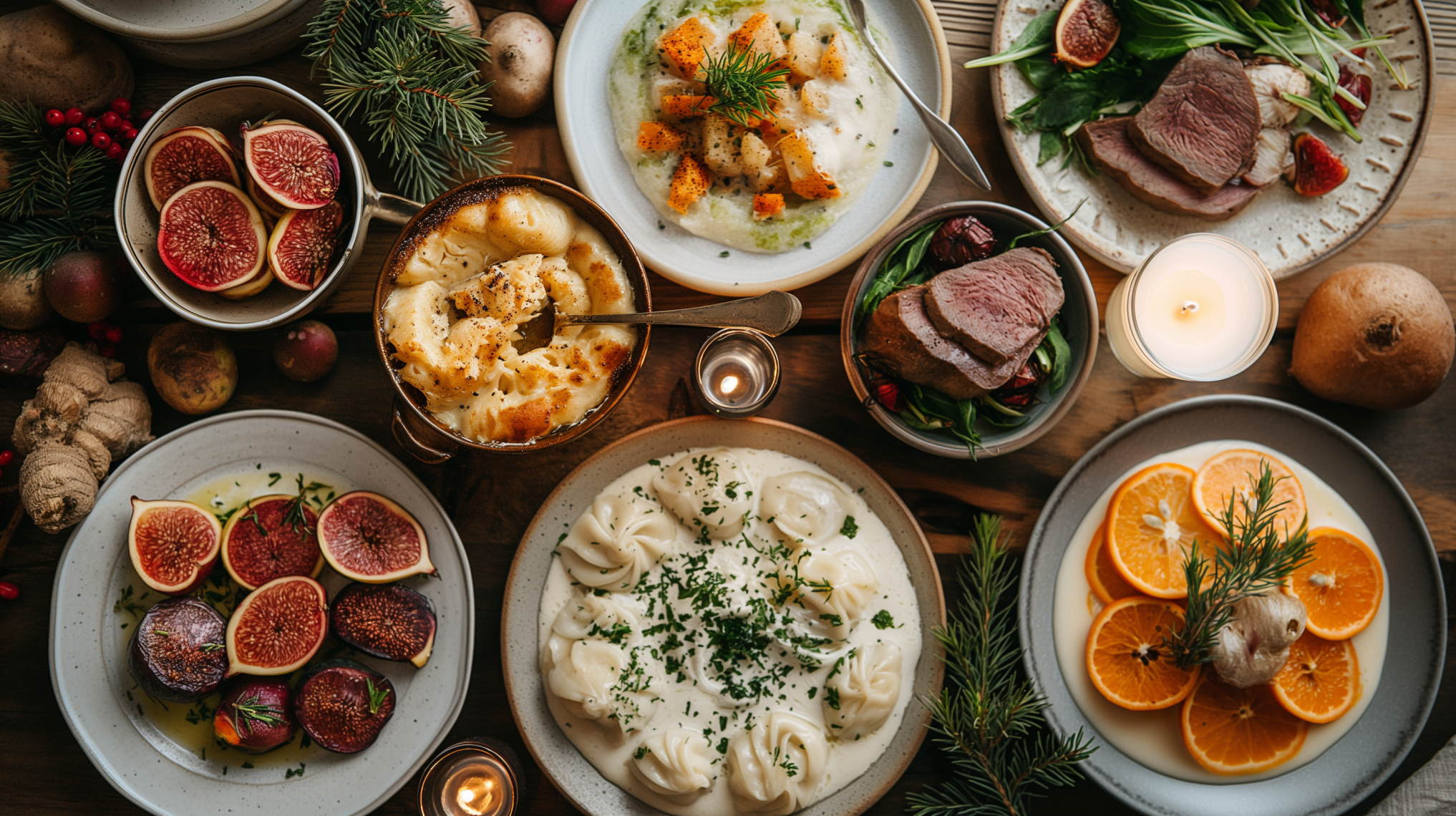
Winter cooking has its own rhythm. It asks you to slow down, soften the edges of the day, and lean into warm flavors that feel both grounding and luxurious. While summer invites spontaneity and fall celebrates abundance, winter is the season of intentional comfort. The ingredients are sturdy and earthy, the colors are deep, and the flavors grow richer the longer they simmer.
Cooking in winter is not about heaviness. It is about depth. It is about building warmth slowly and finishing with brightness so every dish feels balanced. Here is your guide to what chefs reach for during the winter months and how to bring that same elegance into your own kitchen.
Start with Winter’s Best Ingredients
Winter ingredients are dependable. They hold up to roasting, braising, long simmers, and gentle heat. They become sweeter as they cook and create the kind of meals that make you want to stay at the table a little longer.
In season you will find
• leeks
• beets
• cabbage
• potatoes
• carrots
• hearty greens such as kale and chard
• citrus fruits
These are the building blocks of beautifully comforting dishes.
Lean Into Slow, Deep Flavor
Winter cooking rewards patience. A pot of vegetables roasting until caramelized. A pan of leeks melting into sweetness. A stew that becomes more complex by the hour.
Roasting is essential. It brings out natural sugars in carrots, beets, and cabbage. Braising creates tenderness in everything it touches. Soups taste better when aromatics take their time in butter before anything else enters the pot.
Try pairing these methods with gentle acidity to keep dishes bright. Lemon zest stirred into a stew. A splash of sherry vinegar over roasted vegetables. These touches lift the richness and make the flavors sing.
Build Meals Around Warmth and Contrast
A winter plate should feel layered rather than heavy. Chefs often combine comforting elements with contrasting textures to keep the dish lively.
Creamy with crisp
Savory with bright
Rich with fresh
Beets pair beautifully with tangy yogurt or citrus. Roasted potatoes love herbs and a squeeze of lemon. Wilted greens feel complete with toasted nuts for crunch.
The secret is balance. Winter meals should feel satisfying, not sleepy.

Become a Home Chef
✓ Easy to use recipes
✓ Beautifully designed menus
Embrace Citrus for Freshness
Winter citrus is a gift. When everything else feels earthy and grounded, citrus brings sparkle. Oranges, lemons, and grapefruit cut through richness and elevate deeply flavored dishes.
Use the zest in marinades. Add segments to salads. Squeeze juice over a roast as it comes out of the oven. A little citrus transforms a meal that might feel heavy into something refreshing and bright.
Try These Chef Inspired Winter Dishes
If you want dishes that feel cozy yet elevated, these ideas bring winter produce to life.
• Roasted cabbage wedges with browned butter and herbs
• Creamy carrot and citrus soup with toasted seeds
• Braised leeks with white wine and thyme
• Beet and citrus salad with creamy yogurt and fresh herbs
• Crispy potato and leek gratin
• Warm kale salad with roasted squash and lemon dressing
Each one relies on simple ingredients treated with care.
Let Winter Change the Way You Cook
Winter is an invitation to cook slowly, thoughtfully, and with intention. It is a season for meals that gather people around the table and create warmth long after the plates are cleared. When you cook with the season, you feel its rhythm. You let the ingredients lead. You trust that a humble carrot, a simple leek, or a bright orange can become something extraordinary in your hands.
Let winter shape your cooking, and you will find comfort not just in the meals but in the process itself.